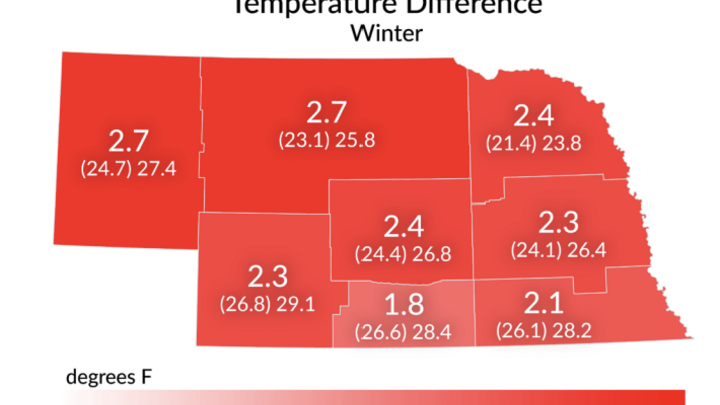
This past week in Nebraska, we are seeing a warming trend following shortly after this cooler than average week. Earlier this past week, highs were in the 70s, especially on Monday, due to increased cloud cover and non-hazardous convective activity. As the week progressed, a strong upper-level ridge started to develop, coming in from the west, bringing the warmer conditions we are seeing now near the end of the week. By Friday and Saturday, temperatures peaked in the upper 80s to mid 90s across much of eastern and central Nebraska, with areas near Lincoln and Omaha pushing 94°F, very much out of the norm of the lower temperatures last week throughout the state. Overnight lows were mild, generally in the 60s. However, despite these “colder” temperatures, we were 10–15°F above climatological norms for mid-September.
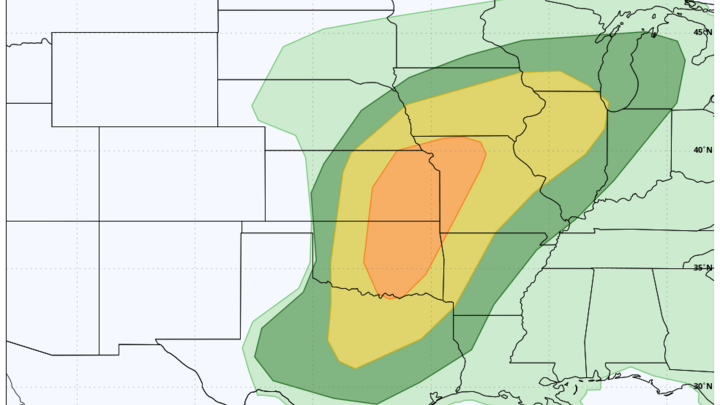
The 850mb temperature field showed a thermal ridge, which showcased the increase in temperature values reaching 72–75°F by late this week. Again, going back to early in the week, a shortwave, also known as a fast-moving upper air disturbance, began moving through the state, and brought some instability and showers, but the stronger ridging later in the week choked out widespread development of further precipitation. 700mb to 500mb flow remained modest, however, there was an increase in moisture transport in eastern Nebraska by Monday night and predicted to increase again this Saturday evening for the eastern end of the state. Despite limited convective available potential energy (CAPE) earlier in the week, values climbed to 1000–2000 J/kg, which is decent amounts for mid-September, near Highway 77 by midweek, supporting limited thunderstorm development, but nothing severe. Mixing heights increased as well, contributing to the surface heating by Friday and Saturday.
A lower frontal boundary lingered near central and southern Nebraska for much of the week, however had little impact as it was not very strong. Due to its weaker components, it was associated with light scattered showers Monday into Tuesday, primarily in the southeast NE area. Ahead of the front, decent southerly winds developed, particularly on Thursday and Friday, which was one of the factors helping to draw in warmer, more humid air for Nebraska. In the western part of the state, conditions were drier with only brief showers early in the week.
Precipitation varied this past week. Monday brought the highest chances (20–40%) in southeastern Nebraska, with a few storms producing 1–2" of rain total within the past week. Most areas, however, remained drier than normal, from what I have seen, especially central and western Nebraska. Only intermittent sprinkles or light showers were noted with generally dry conditions dominating Thursday and Friday.
Some temperature extremes noted for this week were high but not record breaking. These included a few locations reaching or exceeding 94°F Friday and Saturday, such as parts of Lancaster and Gage counties. Earlier in the week, some areas stayed below 70°F under cloud cover and rain. Lows were average between the 40s to 60s throughout the state, with the 40s being experienced closer to the western end, and increasing intermittently toward the west, as expected for September. No major storm events or widespread severe weather occurred. There were, however, isolated storms early Monday and again late Saturday that produced gusty winds and some small hail. Heating degree days (HDD) remained negligible unimportant this week, while cooling degree days (CDD) were more at the forefront due to the heating trend particularly through Friday and into next week.
This week, Nebraska experienced a transition from cooler, wetter conditions early in the week to hot, dry, and mostly stable weather toward the weekend. This was driven by a strong ridge aloft and rising 850mb temperatures. Precipitation was localized and generally limited to early and late portions of the week. The highest max temps reached mid-90s in southeast and central Nebraska, while most lows stayed in the 60s. We should expect warmer temperature trends to increase later in the week with highs in the 70s and 80s and lows in the upper 50s to mid 60s.