
Heat coming back
Temperatures have been seasonally cool over the last few weeks and will continue to be on the cool side through tomorrow. A warm front will move through the state Friday night and winds will turn southerly on Saturday and will be on the breezy side. Temperatures will warm back into the 80's statewide on Saturday with lower 90's likely in the western part of the state. By Sunday, the upper air pattern shows a ridge building over the Mid-South region with a deep trough getting into the western U.S.

Figure 1. Projected 500-mb height anomalies on Sunday
It will be warm statewide and will get downright hot in the eastern side of the state on Sunday. High temperatures in the 90's will be prominent and may flirt with 100°F in the northeast corner of the state where drought conditions are currently worst. Would expect a heat advisory to possibly be needed in east central and southeast Nebraska where the combination of temperatures in the 90's with dewpoints in the 70's will lead to heat index values approaching 105° in the afternoon and early evening hours.
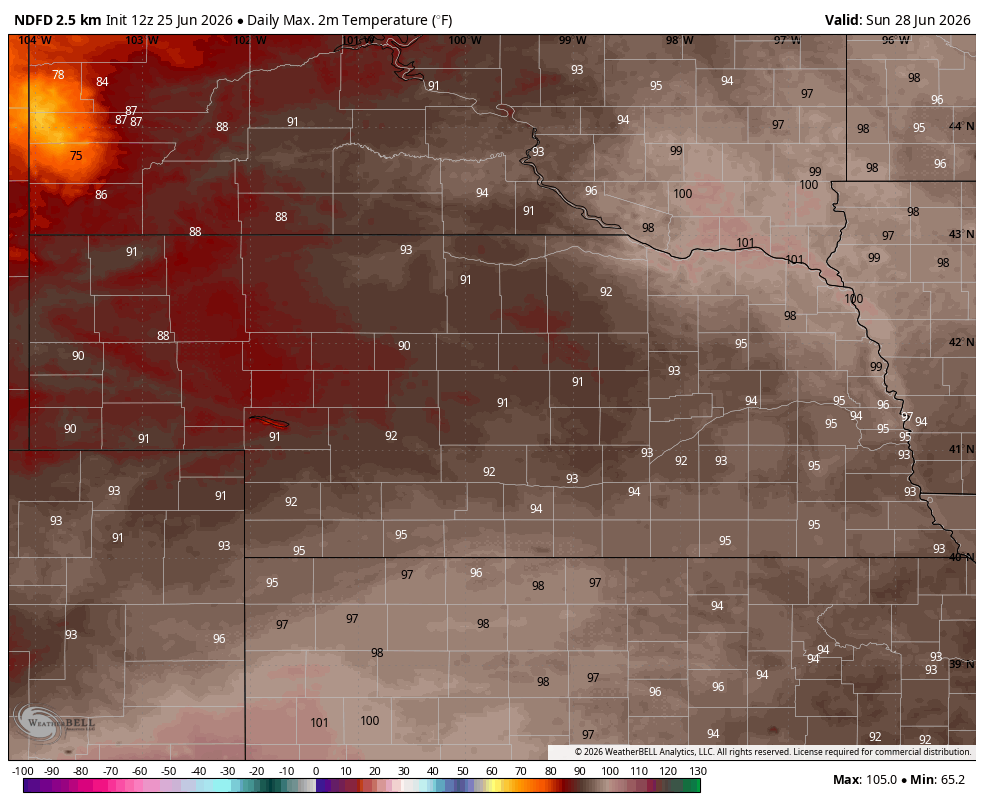
Figure 2. Projected high temperatures on Sunday from the National Blend of Models
Storm chances
By later Monday the trough is likely to have moved into northeast Montana and a surface cold front should be slowly working its way through Nebraska. The ridge to our southeast will grow in size and the flow around that ridge is likely to have some shortwaves embedded in it. The models are not that aggressive at the moment on storm development but often struggle with storm development in the summer during these types of patterns. Bottom line is storms may form in central Kansas and Nebraska on Monday afternoon/evening and push toward the east-northeast. Temperatures on Monday will be hot in the eastern half of the state with heat advisory criteria likely being met in some places. Cooler temperatures with lower humidity are likely in western Nebraska.

Figure 3. Projected 500-mb height anomalies on Monday evening
There are indications in the AI models that the cold front could clear the state Monday night, which would temporarily bring in cooler temperatures to the eastern side of the state on Tuesday. Additional chances of showers and storms will be present on Tuesday night as well in the eastern part of the state. WPC does show some potential for rainfall in the eastern half of the state between Monday afternoon and Wednesday morning but is not overly bullish on significant moisture.
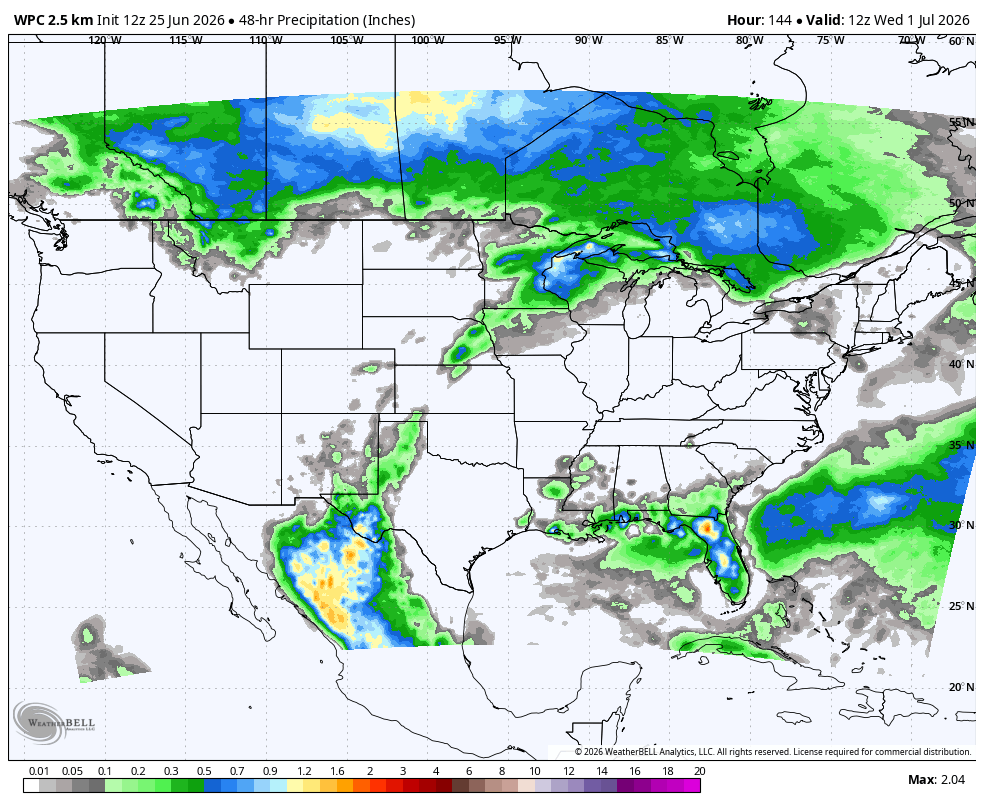
Figure 4. WPC's projected precipitation totals between Monday and Wednesday morning
The Storm Prediction Center also does not have our area in any risk categories early next week. However, with moisture coming up directly up from the Gulf (see Fig. 5) and with nothing to inhibit evapotranspiration rates in the Central Plains early next week, there will be sufficient moisture to promote additional instability along a frontal boundary. Bottom line: severe storms and flash flooding may be possibilities during the evening and overnight hours early next week.
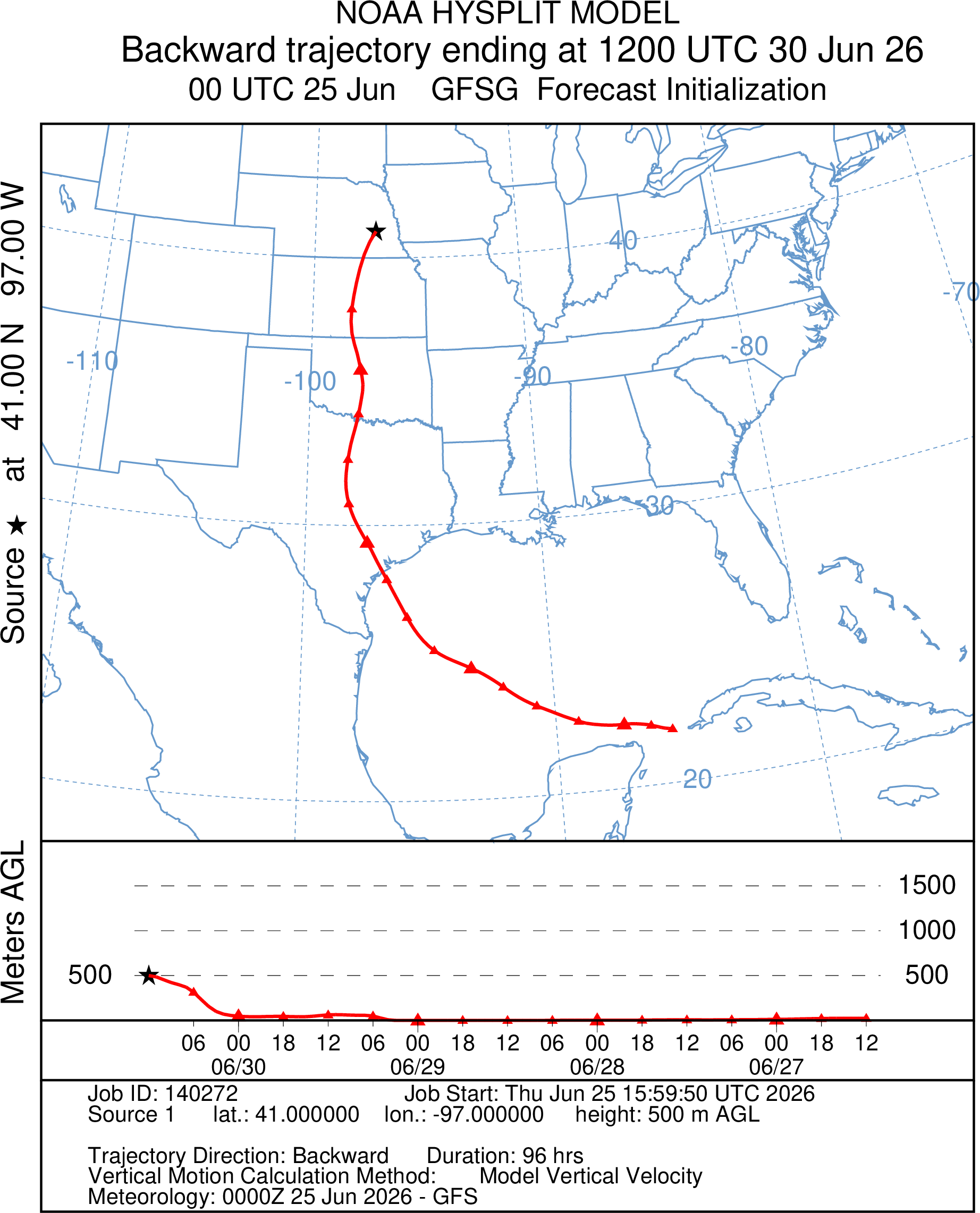
Figure 5. NOAA's HYSPLIT parcel trajectory between Saturday and early Tuesday
Hot 4th
The worst of the heat early in the week likely will be to our east in Illinois and Indiana. By the time we get to later next week, the trough over the northern Rockies is going to get disconnected from stronger upper level flow and will effectively become a cut-off upper level low over western Canada. Ridging over the southeast part of the country will remain strong and will start building toward the west. This will bring the heat back to everyone by Thursday and it likely will be a sultry 3rd and 4th for everyone in this region of the country. Expect highs in the 90's with higher humidity levels in eastern and central sections of Nebraska. There will be some chances of showers and storms on the 4th but confidence in exact timing is not super high.
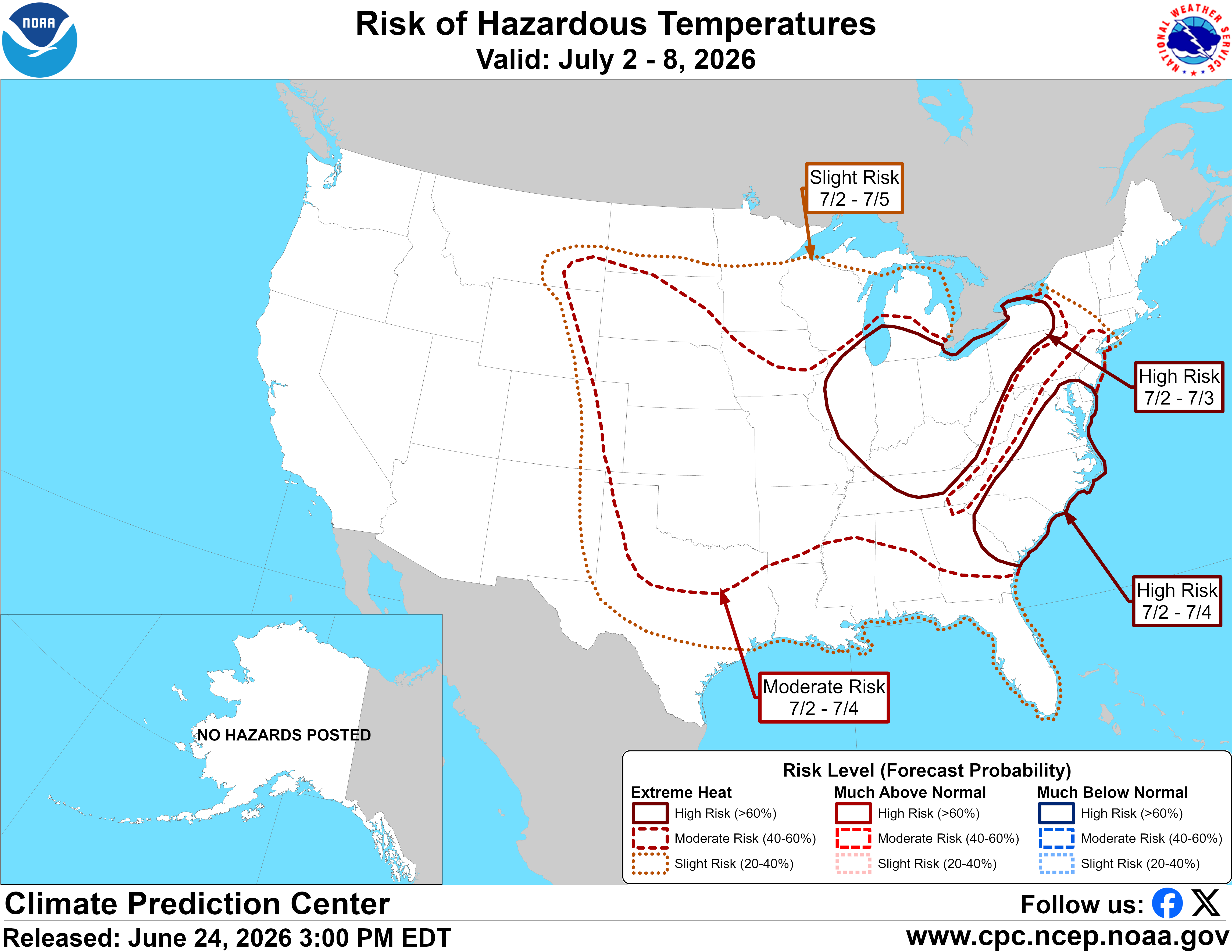
Figure 6. CPC's hazardous temperature outlook for next week.
Persistent southerly winds
Winds will be out of the south for much of next week and there may be an extended window where winds have no break from the southerly flow at the surface and in the lower part of the atmosphere. In recent years these extended stretches of southerly winds did seem to correlate with later presence of southern rust.


