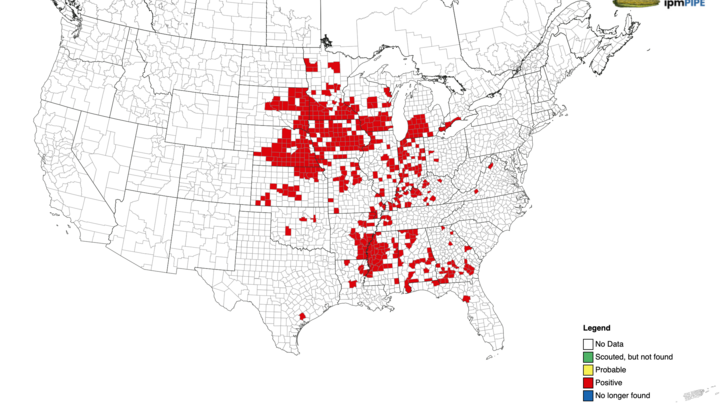
Ideal conditions for southern rust last summer
The summer of 2025 brought plenty of moisture to much of Nebraska and the broader Corn Belt. But conditions were also about as good for southern rust as you could get. Here's a quick summary in 4 reanalysis maps:
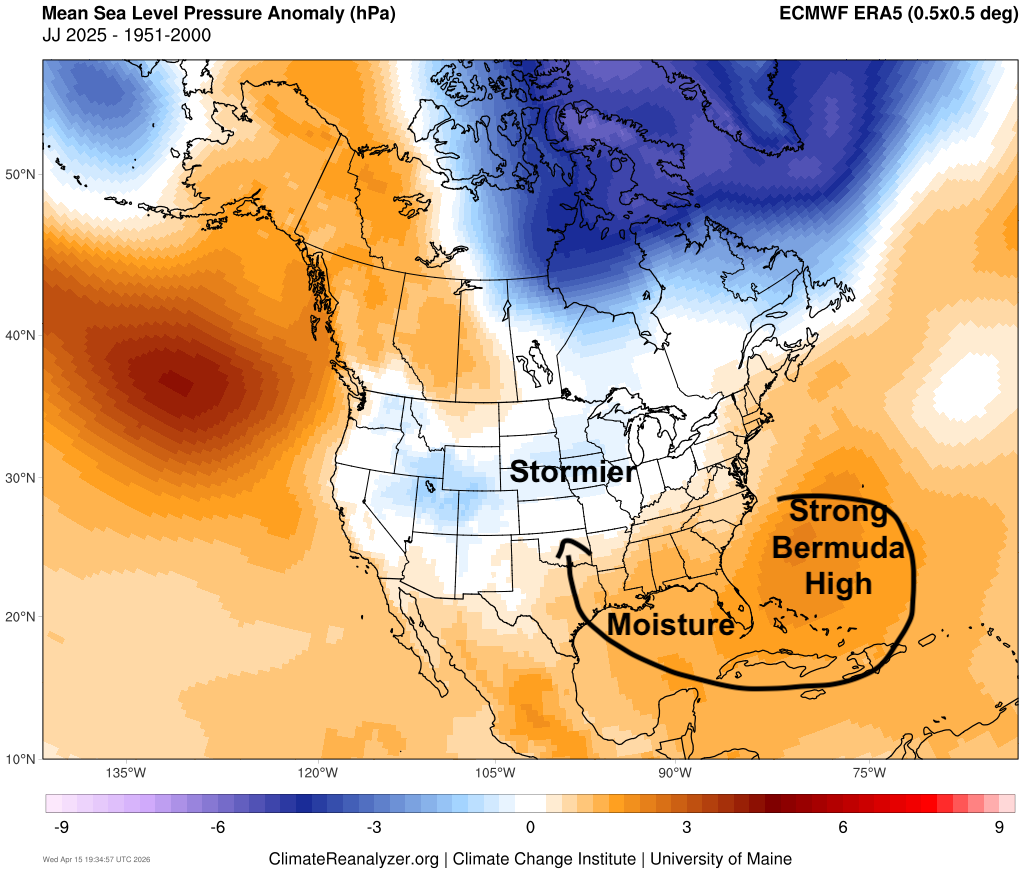
Strong Bermuda High
The Bermuda High was quite strong in the first half of last summer and a bit further west. That meant good southerly return flow around the High into the central U.S.
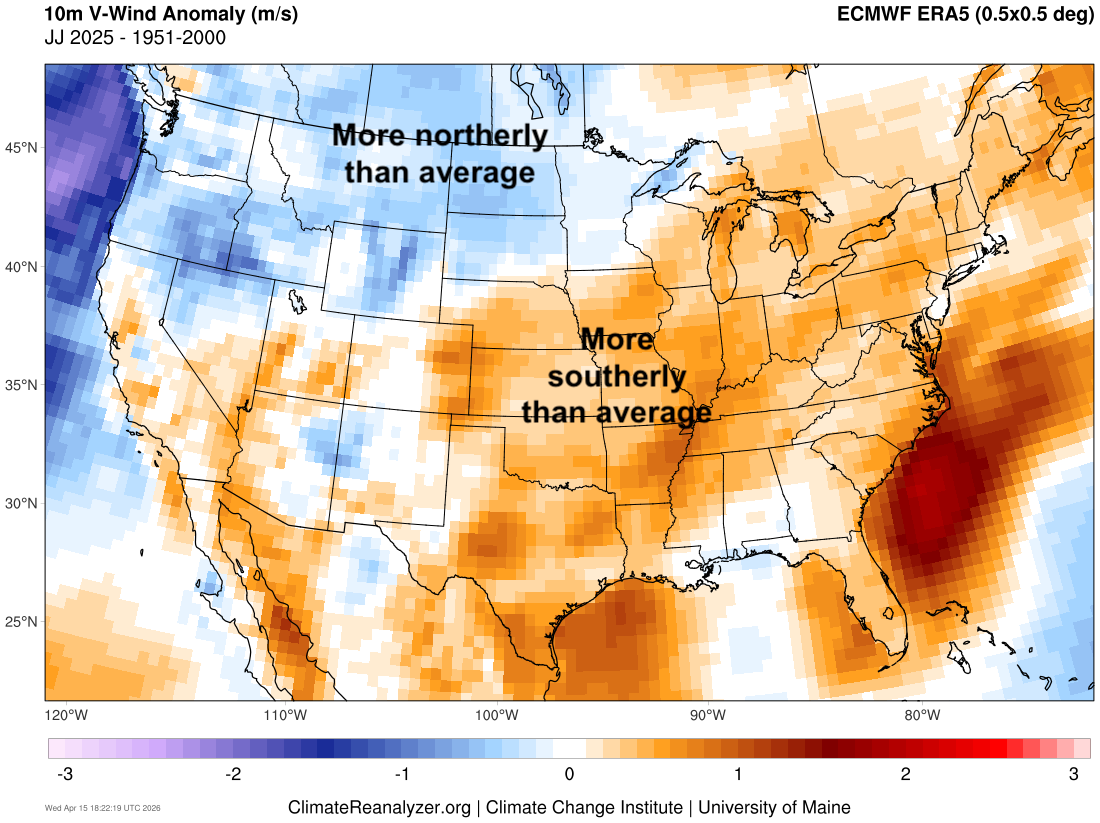
Winds more southerly
The presence and persistence of the Bermuda High meant that we had winds from the south even more often than usual in June and July. This would mean that spores could easily get from Texas/Arkansas into Nebraska and Iowa.
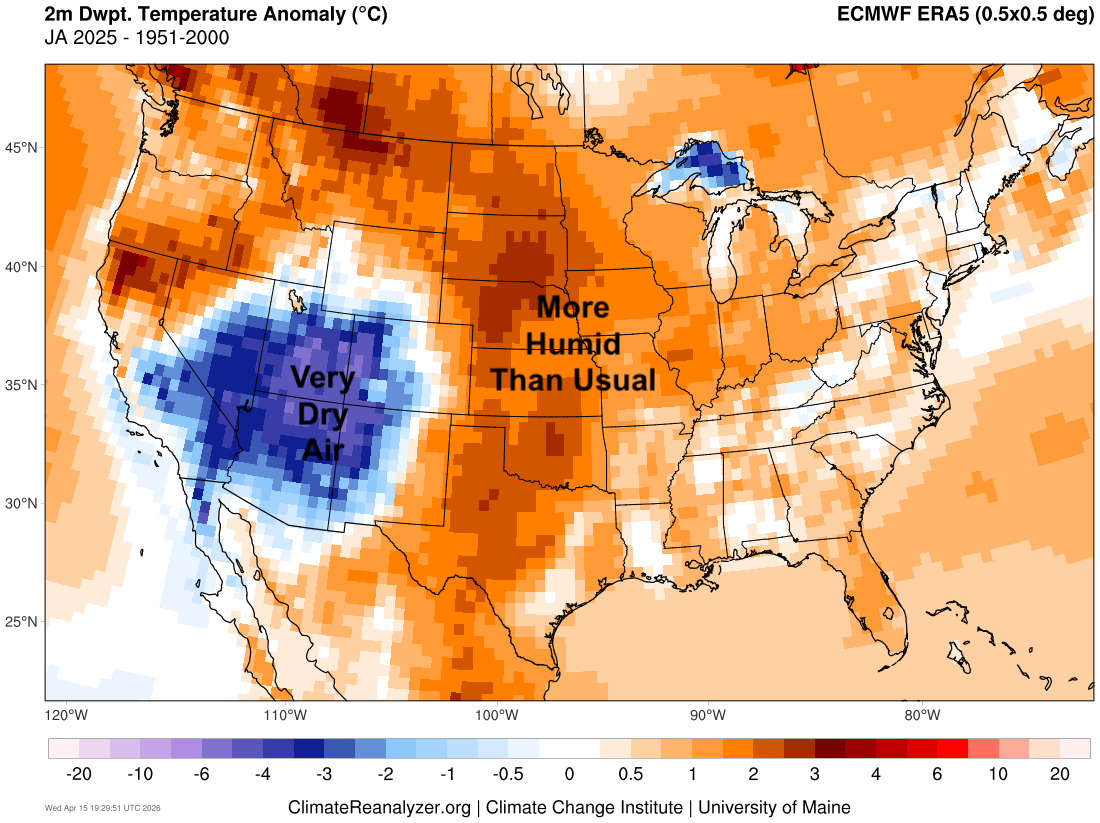
More humid
The persistence of southerly flow from the Gulf allowed for a good moisture source for thunderstorms and also for higher dewpoints and more humidity. Higher levels of humidity are favorable for spores.
Cloudier than usual
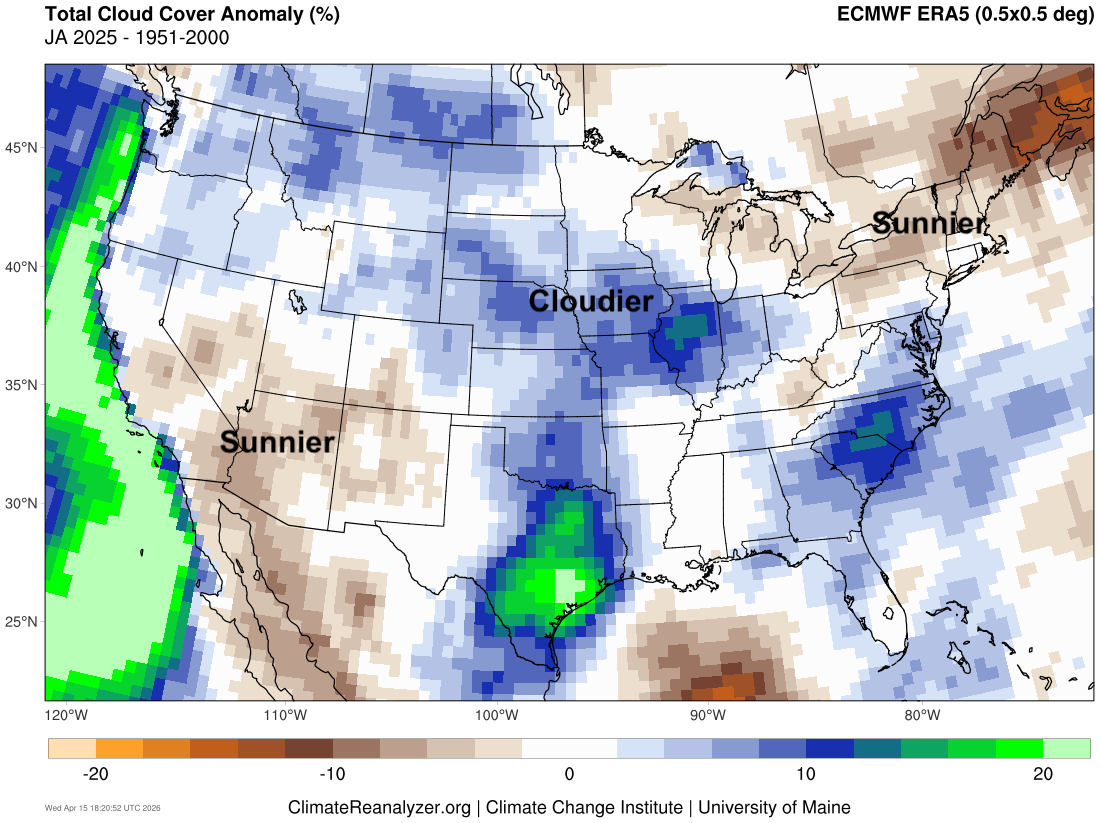
July and August 2025 were cloudier than usual for much of the Corn Belt and was exceptionally cloudy in Illinois according to the ERA5 data. Increased cloud cover also favor spores being able to remain and thrive on corn leaves.