Are Ticks Really a Concern?
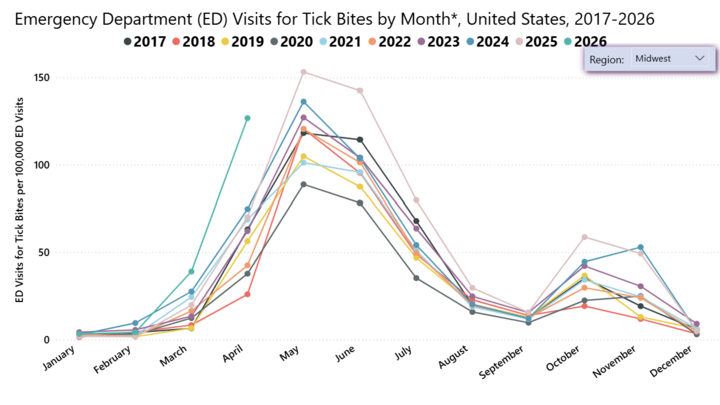
I remember hearing from a friend that ticks are fine as long as you check for them. I’ve been told they take up to 12 hours to attach and rarely carry any of the severe diseases that we associate with mosquitoes. I want to assure you, though, that ticks still pose a great threat to human health. After a record warm winter and for parts of eastern Nebraska, a wet April, tick risk this spring and summer will be significant.
Before diving into this summer’s risk for ticks, it is important to understand a few key facts about ticks.
- Ticks are generalists, but favor dense and woody grasslands
- Adult numbers peak in spring and taper off around July
- Ticks can attach quickly, and some pathogens can transmit in as little as 15 minutes
- Prevention is key to limiting risk
Historic Risks
The upcoming weeks will see significant tick risks across the Midwest. In Nebraska, this risk is greatest in the eastern sixth of the state, where recent thunderstorms and a very warm spring have caused foliage to grow earlier than usual. This risk is also historically significant. A warm winter will allow tick populations to thrive beyond their traditional geographic ranges.
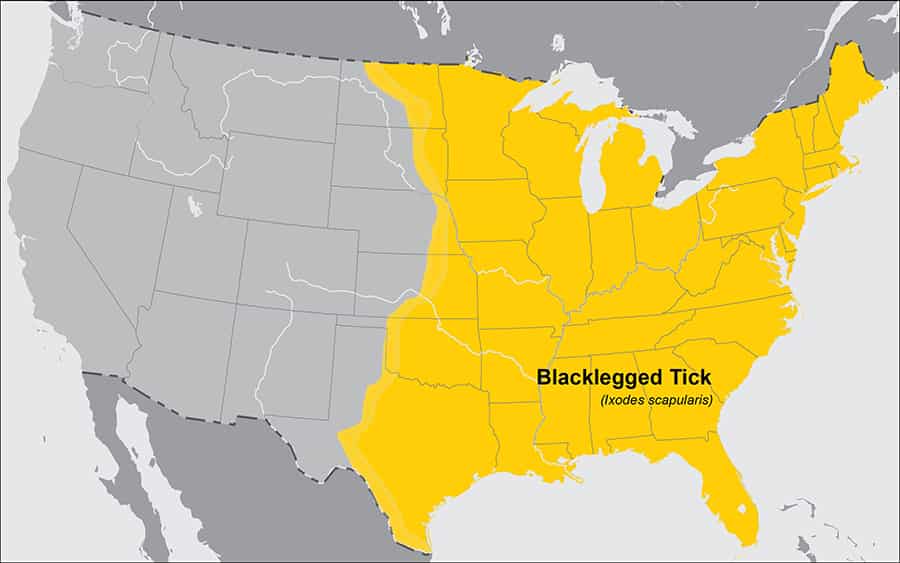
Blacklegged Tick Habitation Map
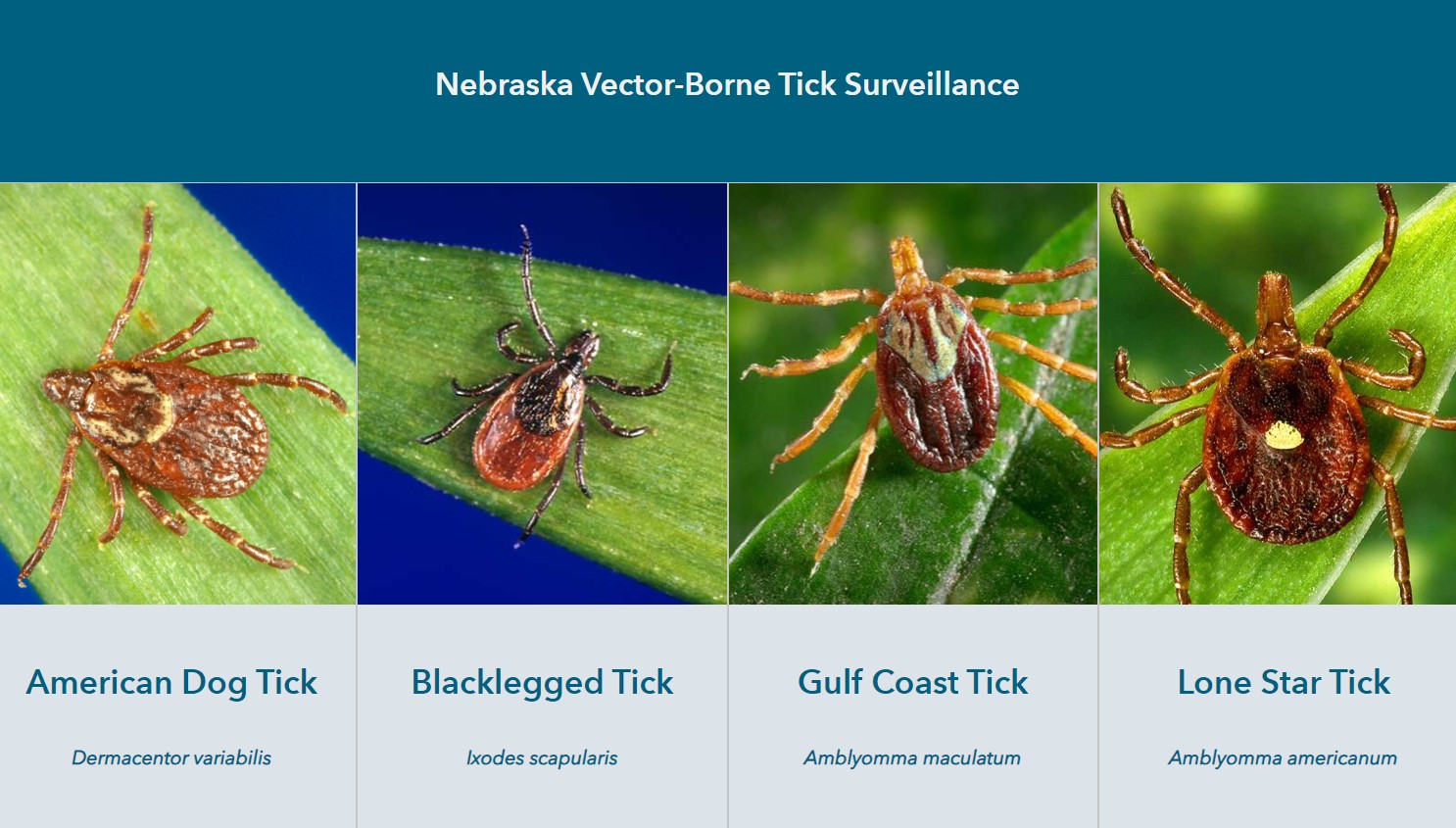
According to the Nebraska Department of Health and Human Services, several ticks already call Eastern Nebraska home. The state department conducts tick surveillance for the species that pose the greatest risk for Nebraskans, including the American Dog Tick, Blacklegged Tick, Gulf Coast Tick, and the Lone Star Tick.
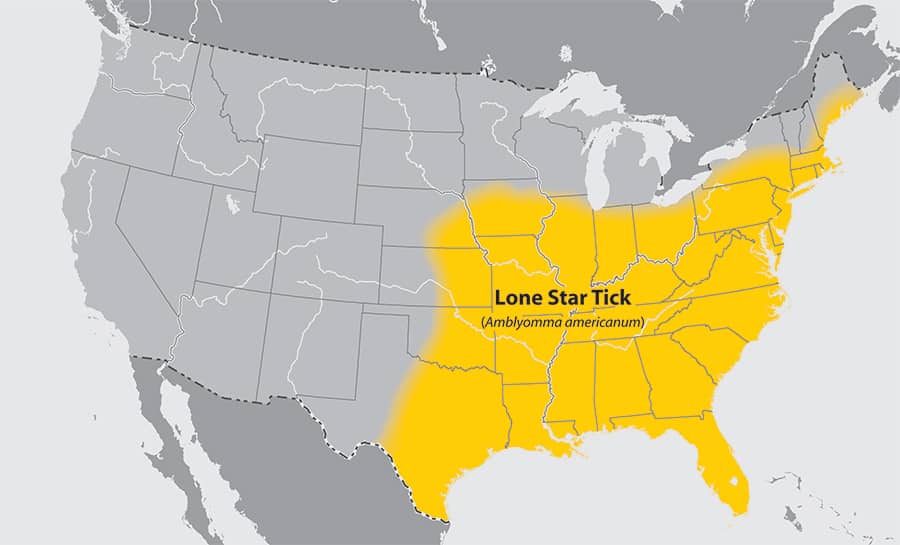
Lone Star Tick Habitation Map.
Tick Pathogens
Like mosquitoes, ticks are dangerous because they serve as vectors for a wide range of pathogens, many of them region-specific. In Nebraska, a variety of diseases can be carried by local tick populations. Of these, the most common pathogens in the state include the following. This list is non-exhaustive but illustrates the importance of tick awareness in Nebraska.
- Spotted Fever Group (Rocky Mountain, etc.)
- Dark scab at bite location, fever, headache, rash, muscle aches
- Ehrlichiosis
- Fever, chills, headache, muscle pain, gastrointestinal distress, altered mental status, and rash
- Tularemia ("Rabbit Fever")
- Ulcer at bite location, fever, headache, anorexia, muscle pain, sore throat, abdominal pain
- Lyme Disease
- Bullseye rash, fever, headache, muscle and joint aches, and swollen lymph nodes
- Alpha-gal Syndrome
- Delayed allergic reaction to red meat or dairy, hives, swelling, anaphylaxis
Many of these pathogens have seen recent increases in case numbers. In 2025, up through June, DHHS recorded 15 Alpha-gal Syndrome cases. Nine (60%) of the cases reported a serious anaphylactic (extreme allergic) reaction. Many people with Alpha-gal Syndrome cases are no longer able to consume red meat, including beef. These are real and growing concerns for the health of Nebraskans and also for the economy of the state.
How can I be Tick Safe?
These health risks can be worrisome. Nebraskan families, though, can take many steps to prevent tick bites. The CDC recommends an action plan before and after outdoor activities to limit exposure to ticks.
Before you go outdoors
- Know where to expect ticks. Ticks live in grassy, brushy, or wooded areas, or even on animals. Spending time outside walking your dog, camping, gardening, or hunting could bring you in close contact with ticks. Many people get ticks in their own yard or neighborhood.
- Treat clothing and gear with products containing 0.5% permethrin. Permethrin can be used to treat boots, clothing, and camping gear and remain protective through several washings. Alternatively, you can buy permethrin-treated clothing and gear.
- Avoid contact with ticks. Avoid wooded and brushy areas with high grass and leaf litter. Walk in the center of trails.
- Use Environmental Protection Agency (EPA)-registered insect repellents containing DEET, picaridin, IR3535, Oil of Lemon Eucalyptus (OLE), para-menthane-diol (PMD), or 2-undecanone. Always follow product instructions. Do not use products containing OLE or PMD on children under 3 years old. When used as directed, EPA-registered insect repellents are proven safe and effective, even for pregnant and breastfeeding women.
- If you are using sunscreen, apply sunscreen first and insect repellent second.
After you come indoors
- Check your clothing for ticks. Ticks may be carried into the house on clothing. Any ticks that are found should be removed. Tumble dry clothes in a dryer on high heat for 10 minutes to kill ticks on dry clothing after you come indoors. If the clothes are damp, additional time may be needed. If the clothes require washing first, hot water is recommended. Cold and medium temperature water will not kill ticks.
- Examine gear and pets. Ticks can ride into the home on clothing and pets, then attach to a person later, so carefully examine pets, coats, and daypacks.
- Shower soon after being outdoors. Showering within two hours of coming indoors has been shown to reduce your risk of getting Lyme disease and may be effective in reducing the risk of other tickborne diseases. Showering may help wash off unattached ticks and is a good opportunity to do a tick check.
- Check your body for ticks after being outdoors. Conduct a full body check upon return from potentially tick-infested areas, including your own backyard. Use a hand-held or full-length mirror to view all parts of your body. Check these parts of your body and your child's body for ticks:
- Under the arms
- In and around the ears
- Inside belly button
- Back of the knees
- In and around the hair
- Between the legs
Around the waist
Prevention Over Worry
Ticks are not a reason to stay inside, but a reason to be prepared. State and federal resources reinforce the idea that we need to limit exposure to ticks. The good news is that prevention works. By reinforcing these habits, we can avoid health risks for our families and friends. Actions as simple as bug repellent on ankles and checking for ticks after morning walks can help to avoid tick bites. A few minutes of preparation is a small price for a summer spent fully outside.
Tick Awareness Resources
- UNL Tick Tag Go (submit ticks you find for ID)
- Medically Important Ticks of Nebraska
- Nebraska Tick Surveillance
- CDC Tick Information
- Alpha-Gal Information
All information in this article is derived from state and federal public resources (DHSS and CDC).


