Drought Monitor
The Drought Monitor released last week shows that much of the western half of the state is still in severe drought (D2) or worse with an area of exceptional drought (D4) in the Panhandle and portions of southwest Nebraska. However, the percentage of all drought categories has improved somewhat in the last few weeks. Furthermore, roughly 20 percent of the state is now free of drought and 9 percent of the state (all southeast NE) has no drought or abnormal dryness.
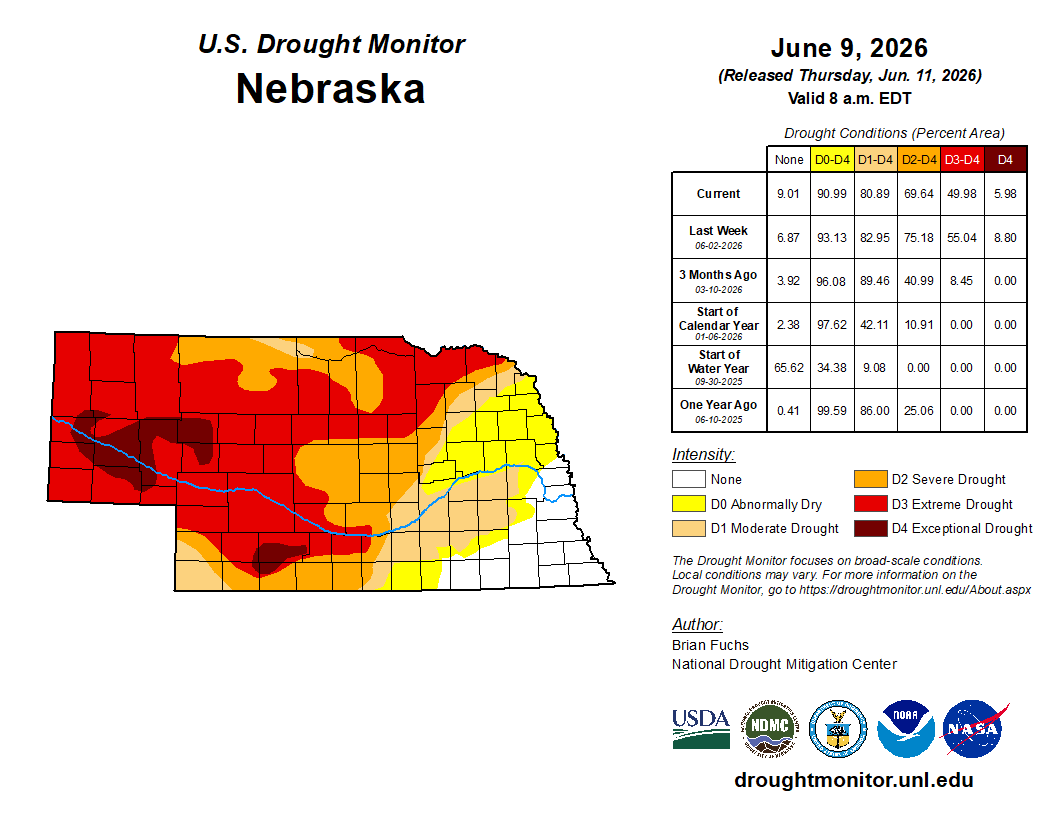
Figure 1. Latest U.S. Drought Monitor
Recent moisture
The last 30 days have delivered significant moisture to much of south central and and southeastern Nebraska, pockets of good moisture to west central sections of the state, and below average precipitation to much of the Panhandle and the area north of O'Neill.
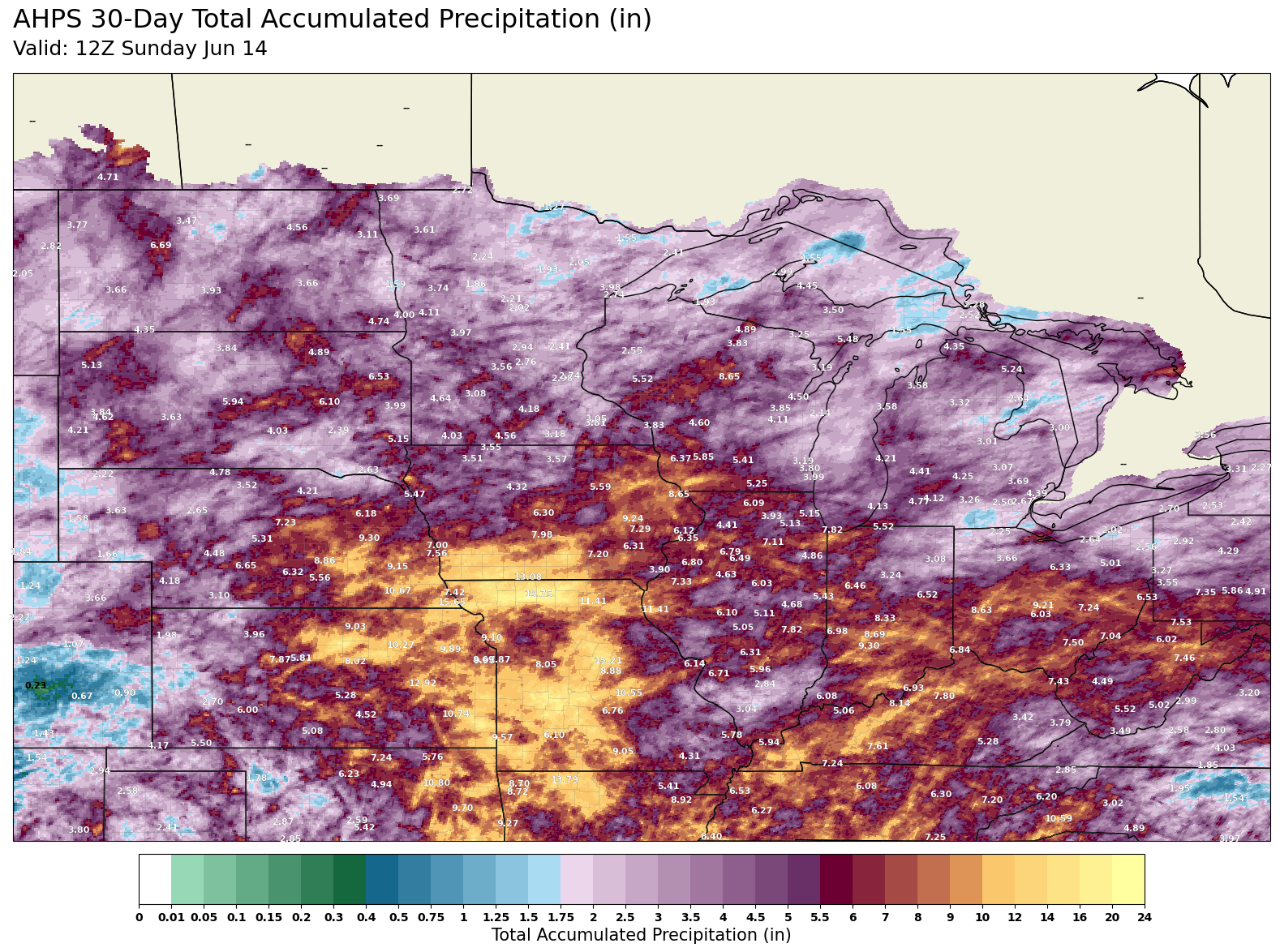
Figure 1. AHPS and observed precipitation over the last 30 days for the central U.S. Figure courtesy of Eric Snodgrass (Nutrien).
Water-year deficits and surpluses
The water year to date (starting October 1) departure from normal map shows that the rainfall over the past month has led to an eradication of WYTD deficits across much of the southeast quadrant of the state, with some significant surpluses between Beatrice and Auburn. Deficits have improved a bit across southwestern Nebraska. However, deficits are still significant in most of the Panhandle, Sand Hills, and are closing in on 10 inches to the north of O'Neill where exceptional drought was in place the week before.
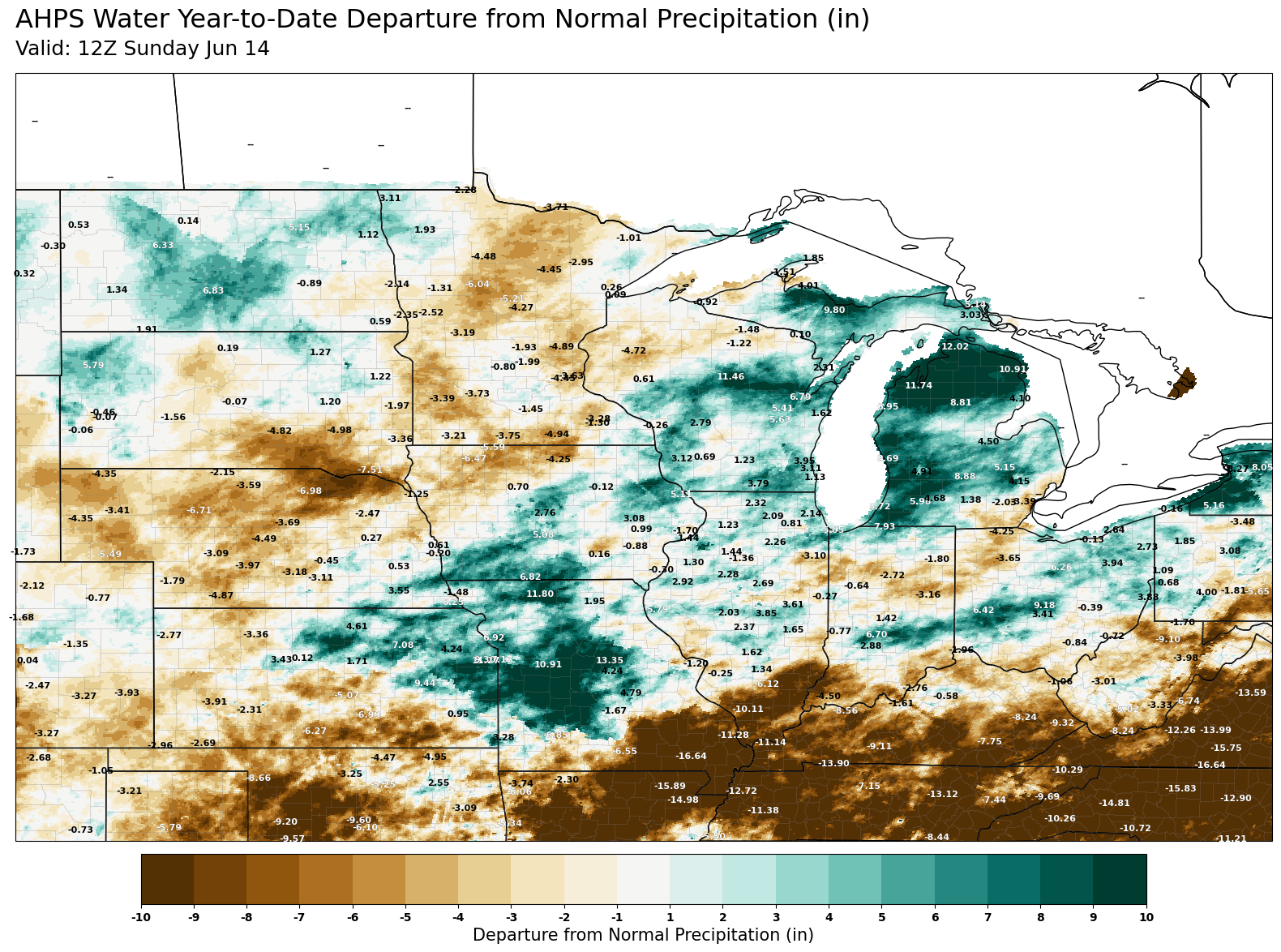
Figure 2. AHPS and observed precipitation deficit/surpluses since the start of the 2026 water year for the central U.S. Figure courtesy of Eric Snodgrass (Nutrien).
Soil moisture
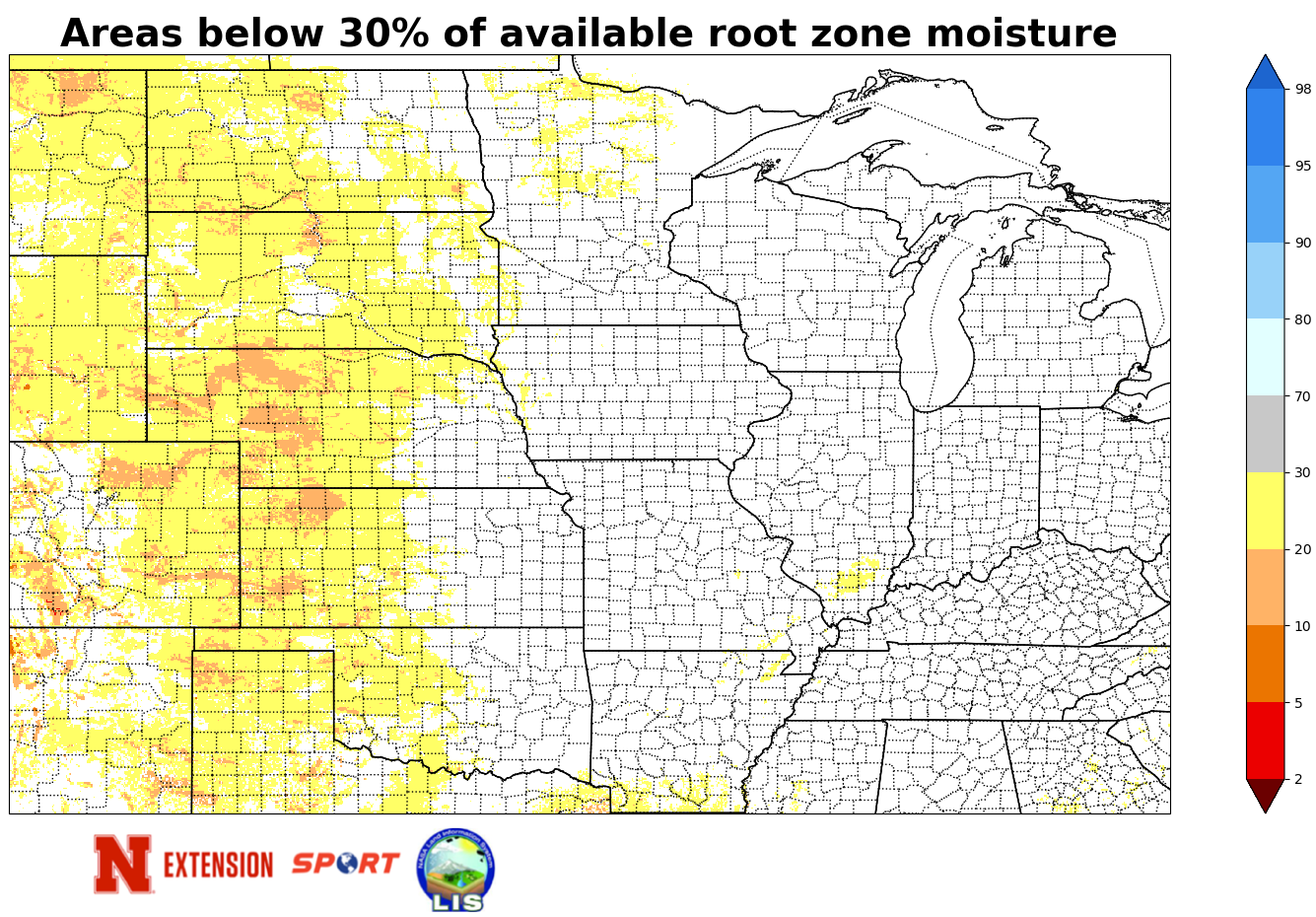
The recent precipitation has not necessarily left a truly full profile of root zone moisture (outside a few spots in southeast NE) but it has improved for many of us. Most of south central and eastern Nebraska are now safely above the 30 percent available water threshold in the top 2 meters according to NASA's SPORTLIS. However, the western half of the state is still short of that mark, meaning vegetation is much more likely to experience stress without supplemental water through irrigation. Fire danger risk will remain elevated on any days with lower humidity and wind until this situation improves.